
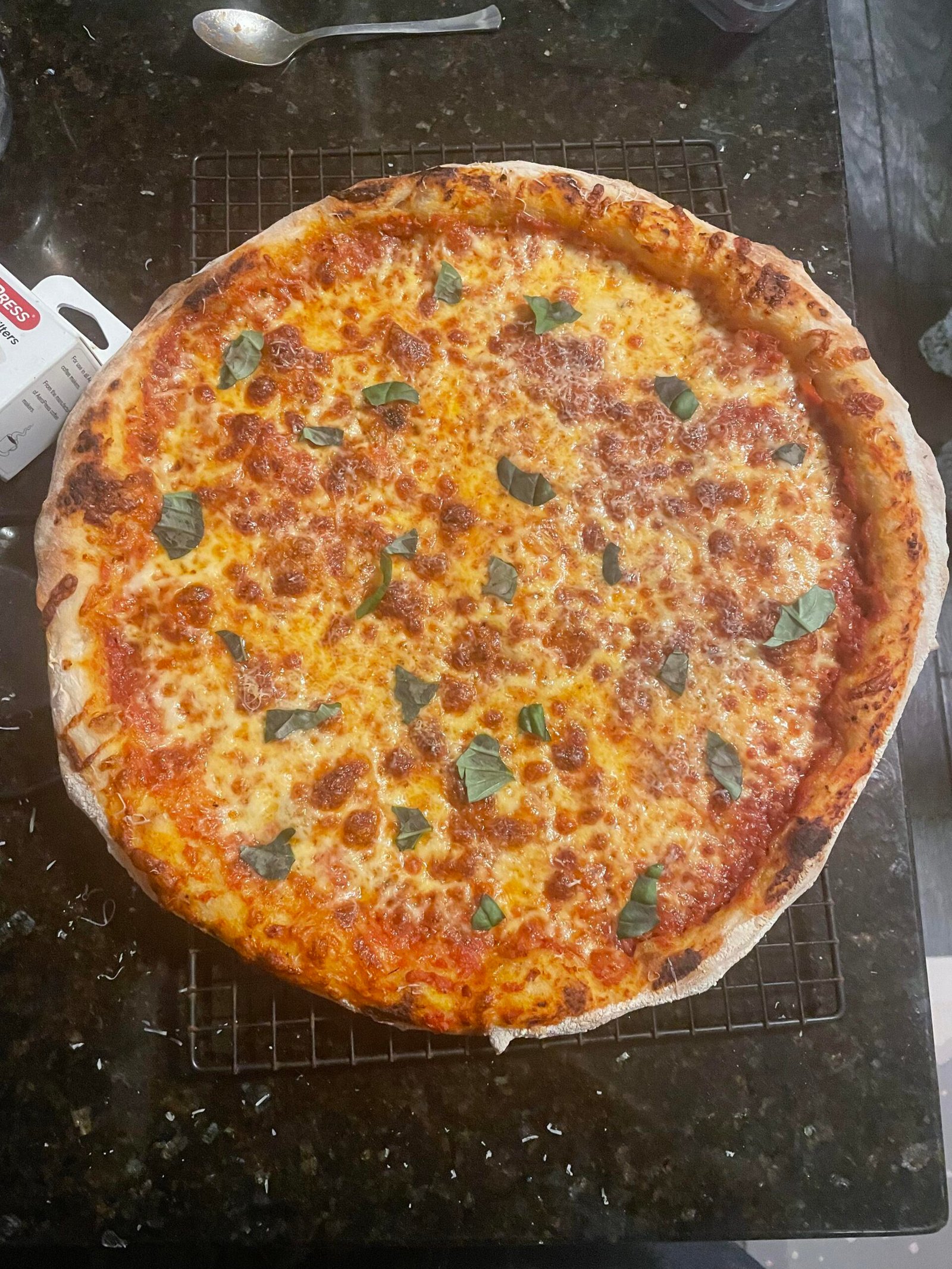
Use 18–22 ounces (510–625 g) dough for a 16-inch pizza.
If you want that perfect crust every time, you need more than a guess. In this guide, I’ll show you exactly how much dough for a 16 inch pizza, plus the why behind the numbers. I’ll share pro tips, formulas, and my own tested recipe so you can scale, mix, and bake with confidence. Whether you love New York thin or a chewier pie, you will walk away with a clear, simple plan.
The math behind how much dough for a 16 inch pizza
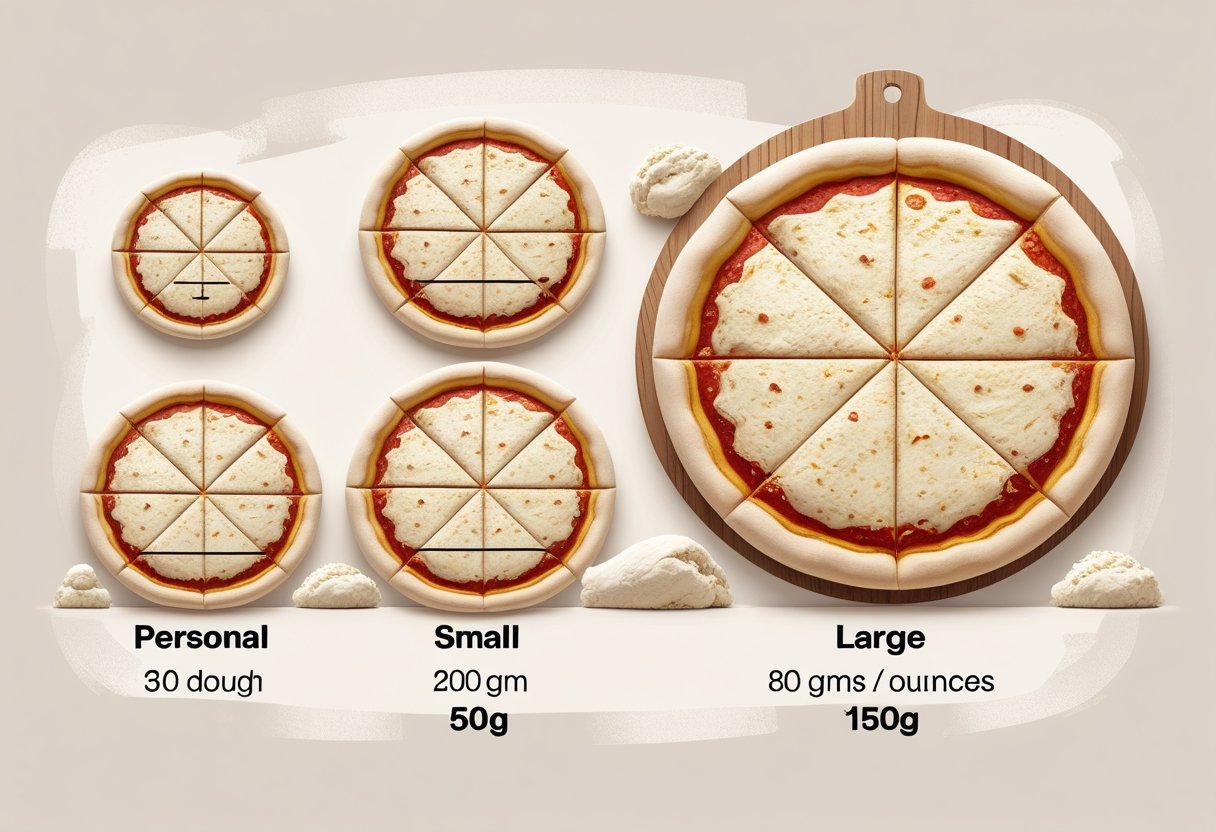
The cleanest way to answer how much dough for a 16 inch pizza is to use area and a thickness factor. This method is used by many pizzerias because it scales perfectly.
Here is the process:
- Find the pizza area. A 16 inch pizza has a radius of 8 inches. Area = π × 8 × 8 ≈ 201 square inches.
- Pick a thickness factor. For New York thin, use 0.08 to 0.10 ounces per square inch.
- Multiply area by factor. 201 × 0.09 ≈ 18.1 ounces. 201 × 0.10 ≈ 20.1 ounces.
What does that mean in real life?
- Thin to classic New York: 18–20 ounces (510–570 g)
- Chewier American style: 20–22 ounces (570–625 g)
- Very thin cracker: 14–16 ounces (400–455 g)
If you came here asking how much dough for a 16 inch pizza, aim for 18–20 ounces to start. That hits the sweet spot in most home ovens.

Dough weight by pizza style
Style changes the target dough weight and feel. Here is a quick guide based on common oven ranges at home.
- New York style, crisp edge, some chew: 18–20 ounces, 60–65% hydration, baked at 500–550°F.
- American hand-tossed, a bit thicker: 20–22 ounces, 60–65% hydration, baked at 475–525°F.
- Thin and crispy, low rise: 14–16 ounces, 50–55% hydration, docked dough, baked at 450–500°F.
- Pan pizza, light and airy with oil: 24–32 ounces, 65–75% hydration, baked in a pan at 450–500°F.
- Neapolitan-inspired at 16 inches is rare. If you try it at home, use 15–17 ounces at 60–62% hydration and a very hot oven or steel. Expect a fast bake.
In my tests, 19–20 ounces works best for a 16 inch New York pie on a steel. If I move to a stone, 18 ounces often opens easier and bakes more even in the center.
Hydration, flour, and fermentation impact
Hydration is the water as a percent of flour. It changes how the dough stretches and bakes. It also affects how much dough for a 16 inch pizza feels right in your hands.
- Hydration 58–60% is easy to handle and less sticky. It makes a tighter crumb.
- Hydration 60–65% gives nice stretch, good oven spring, and a tender bite.
- Hydration 65–70% adds air and chew, but it needs a gentle touch and a longer bake.
Flour choice matters too:
- Bread flour gives more chew and structure. It is great for 16 inch New York pies.
- All-purpose flour can work at 60–62% hydration with a shorter ferment.
- 00 flour is best for very hot ovens. In a normal oven, it can bake pale unless you tweak sugar or oil.
Fermentation shifts feel as well:
- Same dough weight, longer cold ferment equals more gas and easier stretch.
- If the dough is gassy and puffed, that same 18–20 ounces will look larger and thinner.
- Plan the weight and the ferment together. Your answer to how much dough for a 16 inch pizza gets better when time is part of the plan.
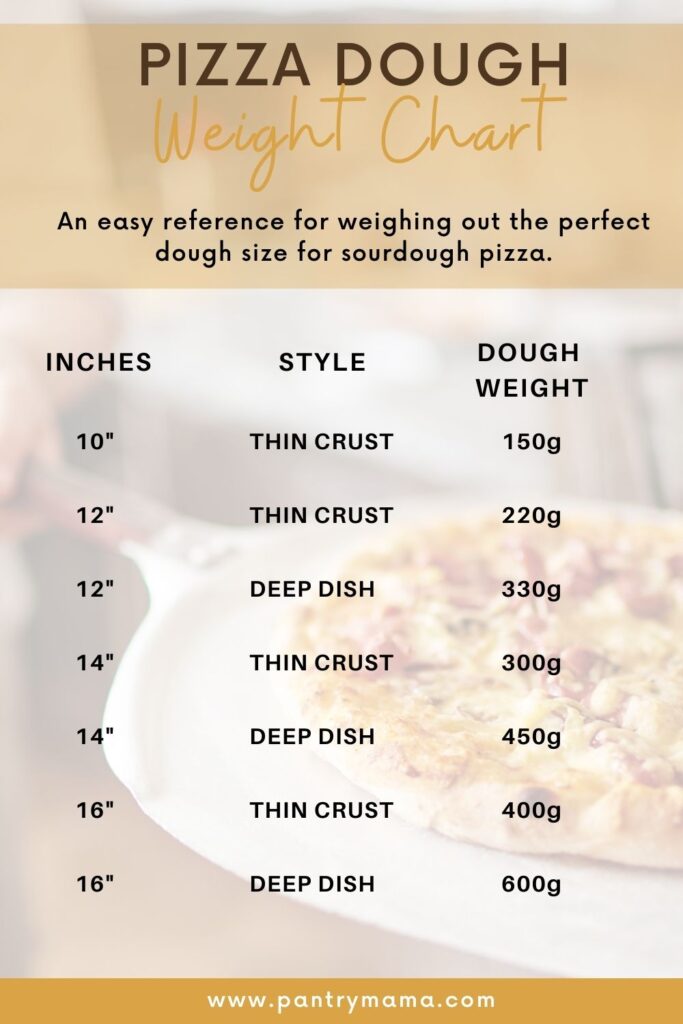
Source: pantrymama.com
A reliable 16-inch pizza dough recipe (grams and ounces)
Target weight: 560 g total dough (about 19.75 ounces). This fits the core target for how much dough for a 16 inch pizza. It lands between thin and classic New York.
Baker’s percentages:
- Flour 100%
- Water 62%
- Salt 2.5%
- Oil 2%
- Instant dry yeast 0.2%
Ingredient weights for one 16 inch pizza:
- Bread flour: 336 g
- Water: 208 g
- Fine sea salt: 8.4 g
- Olive oil: 6.7 g
- Instant dry yeast: 0.7 g
Method:
- Mix water, yeast, and half the flour until smooth. Rest 10 minutes.
- Add the rest of the flour and salt. Mix to a shaggy dough.
- Add oil. Knead until smooth and slightly tacky, about 5–7 minutes by hand.
- Rest 20 minutes. Then do one set of gentle folds. The dough should feel elastic.
- Ball the dough tight. Lightly oil and place in a covered container.
- Cold ferment 24–72 hours at 38–40°F. Flavor gets better each day.
- Warm at room temp for 60–90 minutes before stretching.
Bake:
- Heat a steel or stone at 525–550°F for 45–60 minutes.
- Stretch to 16 inches, top light, and bake 6–8 minutes on a steel, or 8–10 minutes on a stone.
- For a crisp base, finish 1–2 minutes on the top rack.
Note: If you prefer cups, 336 g flour is about 2.6 to 2.8 cups, but weigh if you can. Accurate flour weight is key when dialing in how much dough for a 16 inch pizza.

Handling, shaping, and baking tips
You can nail how much dough for a 16 inch pizza and still miss the bake if handling is off. These steps keep things smooth.
- Warm the dough slightly. Cold dough resists stretch and tears.
- Dust with a 50–50 mix of flour and fine semolina for easy movement.
- Press the center out and leave a 1 inch rim. Do not crush the edge.
- Lift and stretch over your knuckles. Work around in a circle.
- Keep toppings light. Heavy loads fight oven spring and can sog the center.
- If launching is scary, use parchment for the first 2 minutes, then pull it out.
Pro note: If you stretch and it keeps shrinking, let the dough rest for 5 minutes. Then try again.
:max_bytes(150000):strip_icc()/20211115-OONI-PIZZA-ARMENIAN-ANDREW-JANJIGIAN-23-5447ecc61b12450d9a09f38cca67c19c.jpg)
Common mistakes to avoid
Getting how much dough for a 16 inch pizza right is step one. Avoid these common traps too.
- Overproofed dough. It tears fast and tastes yeasty. Use the fridge and watch volume.
- Underproofed dough. It fights you and bakes dense. Give it time to relax.
- Too much dough for your oven. If your heat is weak, go a bit lighter. It will bake more even.
- Toppings overload. Keep sauce thin and cheese moderate. Less is more at 16 inches.
- Cold stone or short preheat. Long preheats give better browning and a crisp base.

Source: reddit.com
Scaling for different sizes and batches
Once you see the formula, scaling how much dough for a 16 inch pizza is easy. Use the same method for any size.
- Step 1: Area = π × radius × radius.
- Step 2: Pick a thickness factor. Use 0.09 ounces per square inch for New York.
- Step 3: Multiply area by the factor to get dough weight in ounces. Convert to grams as needed.
Quick examples at 0.09 oz/in²:
- 12 inch: area 113.1 → about 10.2 ounces
- 14 inch: area 153.9 → about 13.8 ounces
- 16 inch: area 201.1 → about 18.1 ounces
- 18 inch: area 254.5 → about 22.9 ounces
For multiple pizzas, multiply total flour first using baker’s percent. Then scale water, salt, oil, and yeast. Your answer to how much dough for a 16 inch pizza stays constant, and you build from there.

Frequently Asked Questions of How Much Dough for a 16 Inch Pizza?
What is the best dough weight for a 16 inch New York style pizza?
Aim for 18–20 ounces (510–570 g). This range fits most home ovens and gives a crisp yet chewy bite.
Can I use the same dough for pan and thin-crust 16 inch pies?
You can, but adjust weight and hydration. Pan needs more dough and higher hydration, while thin-crust uses less dough and lower hydration.
How does hydration change how much dough for a 16 inch pizza?
Hydration does not change the total weight much, but it changes feel and rise. Higher hydration stretches easier and bakes lighter.
What if my 16 inch pizza is too thick in the center?
You likely used too much dough or did not press the center thin. Reduce dough by 1–2 ounces or press more in the middle before stretching.
Does long cold fermentation change dough weight for a 16 inch pizza?
Weight stays the same, but gas and structure increase. The dough opens larger with less effort, so plan your stretch and topping load.
How much dough for a 16 inch pizza if I want extra thick crust?
Use 22–24 ounces. Bake a little longer and lower the oven rack if needed.
Can I make two 16 inch pizzas from one big batch?
Yes. Double the flour using baker’s percent, then scale all other ingredients. Divide and ball after mixing for even fermentation.
Conclusion
Now you know exactly how much dough for a 16 inch pizza and how to fine-tune it for your style, oven, and schedule. Use the area formula, pick a smart thickness factor, and let hydration and time do the rest. Small tweaks in weight, water, and ferment will give you repeatable wins.
Roll up your sleeves and bake one this week. Test 18, 19, and 20 ounces side by side, take notes, and lock in your favorite. Want more guides like this? Subscribe, ask a question in the comments, or share your bake so we can dial it in together.
Read More: