
A pizza size measurement tool helps you measure dough and pizza diameters fast.
You stretch your dough. It looks perfect. Then you bake it and realize it’s a “14-inch” pie that barely reaches 12. Sound familiar? Getting pizza size right can be tricky, and the wrong tools make it worse. A good pizza size measurement tool takes out the guesswork, keeps portions consistent, and helps you bake like a pro. In this guide, I review smart, affordable tools that improve sizing accuracy, prevent bubbles, and make prep easier. If you’re tired of lopsided pies and uneven slices, these picks will level up your home pizza game.
BOORIKA Stainless Steel Dough & Bench Scraper

This stainless steel bench scraper from BOORIKA is a simple kitchen workhorse. I reach for tools like this when I want clean cuts, straight edges, and precise portioning. The flat blade lifts sticky dough from the counter without tearing it. It doubles as a quick pizza size measurement tool because the straight edge makes it easy to mark target diameters on a floured surface.
In practice, it saves time during prep. You can divide dough balls by weight, then use the scraper to shape and lift them cleanly. When I roll out a pie, I use the scraper to check width across the center. It also shines on a griddle or baking steel, clearing bits after a cook so the next pizza doesn’t scorch.
Pros:
- Solid stainless steel blade resists bending and warping
- Flat edge makes quick work of portioning and shaping
- Useful as a basic pizza size measurement tool on the fly
- Easy to clean; no crevices to trap dough
- Works for pizza, bread, cookies, and grill clean-up
Cons:
- No printed measurement marks on some batches
- Handle can feel slick with oily hands
- Not a dedicated docker or cutter
My Recommendation
If you want one tool that does a lot, start here. It helps you portion dough, clean your bench, and gauge size while shaping. I treat it as a simple pizza size measurement tool when I do not want to pull out a tape or ring. It suits beginners who need control and pros who want speed.
| Best for | Why |
|---|---|
| Everyday dough handling | Clean cuts, lifts, and shapes with ease |
| Quick size checks | Use the straight edge to gauge diameter |
| Griddle and steel clean-up | Scrapes off bits without scratching surfaces |
Orblue Pizza Dough Docker Roller, Black

This Orblue dough docker is a go-to tool for preventing big bubbles and blisters. Docking lets gas escape so your crust bakes evenly and flat. If your pies balloon in the oven, a few passes with this spiked roller can fix that fast. It is sturdy enough for home use and light commercial work.
While a docker does not measure size, it supports accurate sizing. A flat, evenly docked dough is easier to stretch to 10, 12, or 14 inches consistently. I use it when I want thin-crust or cracker-style pies that stay level. It pairs well with any pizza size measurement tool for predictable results.
Pros:
- Stops blistering that ruins shape and bake
- Simple, fast, and beginner-friendly
- Solid build with firm spikes for effective docking
- Works on pizza, tart shells, and flatbreads
- Helps keep crust thickness even end-to-end
Cons:
- Not a cutter or scraper
- Plastic handle can flex if pressed too hard
- Requires light pressure practice to avoid over-docking
My Recommendation
If your crust puffs in random spots, this is a fast fix. It keeps the dough flat so you can stretch to an exact size. I treat it as a companion to a pizza size measurement tool, not a replacement. It is ideal for thin-crust fans and anyone using baking steels or perforated pans.
| Best for | Why |
|---|---|
| Thin and crispy pies | Docking stops big bubbles from lifting the crust |
| Even baking | Creates uniform heat contact across the dough |
| Beginner pizza makers | Easy way to improve results with little effort |
Stainless Steel Bench Scraper with Scale

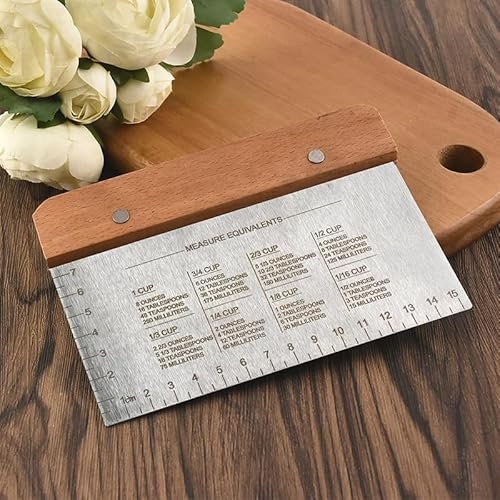
This multipurpose bench scraper includes a measuring scale, which is a small but powerful upgrade. The ruler marks speed up everything: portioning, shaping, and checking dough width. I use the scale to confirm a 12-inch round without guessing. The stainless blade stays rigid so you get clean cuts every time.
As a pizza size measurement tool, it is practical and space-saving. You do not need a separate ring or tape measure to confirm diameter. Use the scale to track progress as you stretch the dough. It is also great for cleaning a board or slicing bar-style pizzas into neat rectangles.
Pros:
- Built-in measuring scale for fast sizing
- Rigid stainless blade for clean portioning
- Doubles as a pizza size measurement tool
- Ergonomic grip helps control and comfort
- Easy to wash and maintain
Cons:
- Printed marks can fade with harsh scrubbing
- Not ideal for nonstick surfaces
- No docking function
My Recommendation
Get this if you want one tool that measures and cuts. The integrated scale makes it a smart pizza size measurement tool for small kitchens. It is perfect for home cooks who crave repeatable 10-, 12-, or 14-inch pies. If you like neat prep and fast clean-up, this one pays for itself.
| Best for | Why |
|---|---|
| Consistent pizza sizes | Measurement marks speed up diameter checks |
| Portion control | Divide dough into equal pieces by width |
| Small kitchens | Replaces multiple tools with one compact scraper |
Orblue Pizza Dough Docker Roller, Gray

This gray Orblue docker works like the black version but with a sleek look. It pierces dough quickly to vent steam and control rise. The spikes are long enough to make a real difference without tearing. It is reliable for home ovens, stones, and steels.
I use a docker when I want predictable results on party nights. It keeps the crust flat so every pizza follows the same size plan. Combine it with a pizza size measurement tool like a marked bench scraper or a pizza peel with etched rings. The result is less waste and more consistent pies.
Pros:
- Effective spiked roller reduces blistering
- Even docking pattern supports uniform baking
- Comfortable handle for longer prep sessions
- Good value for frequent pizza nights
- Also useful for crackers and pastry shells
Cons:
- Not a cutting or measuring tool
- Hand wash recommended to protect the roller
- May not fit small drawers due to width
My Recommendation
Choose this if you bake for a crowd and want steady results. It is a great partner to any pizza size measurement tool you already use. The docker keeps the surface flat, so stretching to your target diameter gets easier. It suits thin and medium crust bakers who want control over bubbles.
| Best for | Why |
|---|---|
| Party night prep | Fast docking for multiple crusts in a row |
| Thin-crust lovers | Prevents puffing that distorts shape |
| Home and light commercial | Sturdy build with easy use |
Pizza Dough Docker Roller for Home Kitchens

This budget-friendly dough docker aims to save time and cut down on flawed bakes. It helps control dough bubbles inside home ovens, where heat can be uneven. The roller design is simple and easy to learn. A few light passes can turn an inconsistent crust into a smooth, level base.
Use it when you want repeatable results without fuss. The tool complements a pizza size measurement tool by ironing out surface issues before you size the dough. I like it for weeknight pies and quick flatbreads. It is a small upgrade that drives big improvements in texture.
Pros:
- Affordable and effective for most home cooks
- Quick docking reduces waste from failed crusts
- Lightweight and easy to store
- Improves contact with baking stones and steels
- Great for kids to learn safe dough prep habits
Cons:
- Not as heavy-duty as premium models
- Plastic parts may wear with heavy use
- No measurement or cutting function
My Recommendation
Buy this if you want a low-cost fix for bubbling. It works best as a helper to your pizza size measurement tool. Keep your dough flat, then size it to your target diameter. It is perfect for beginners and busy families who want fewer surprises.
| Best for | Why |
|---|---|
| Budget shoppers | Solid results without a big spend |
| Weeknight pizzas | Fast tool that improves texture quickly |
| Teaching kids | Safe, simple motion to learn docking |
Stainless Steel Tray Scraper with Marks

This stainless steel scraper includes measurement marks, which is great for sizing dough and trimming edges. The blade is flat and wide, with a handle that keeps your fingers safe. I use tools like this for sheet-pan Sicilian pizzas and focaccia. It clears pans without scratching and helps cut clean, straight lines.
As a pizza size measurement tool, the marks help you map out dimensions. Measure a 10×14 pan pizza or track round diameter on the bench. It is also handy for barbecue and general kitchen projects. If you want form and function in one, this is a smart buy.
Pros:
- Measurement marks for fast, visible sizing
- Wide blade clears trays and pans with ease
- Useful for pizza, bread, and grill work
- Durable stainless steel build
- Easy to rinse and wipe clean
Cons:
- Marks can wear with abrasive pads
- Bulkier than a compact bench scraper
- Not a dedicated docker
My Recommendation
Pick this if you bake pan pizzas or want clearer size targets. It doubles as a pizza size measurement tool and a tough scraper. The wide blade helps with sheet pans, while the marks keep your cuts neat. It is great for home bakers who care about clean lines and exact sizes.
| Best for | Why |
|---|---|
| Pan pizza sizing | Measurement marks make layout simple |
| Tray and grill clean-up | Wide blade clears residue quickly |
| Straight, neat cuts | Rigid edge keeps slices uniform |
How to Choose a Pizza Size Measurement Tool
Pick a tool that fits how you make pizza. If you stretch rounds by hand, a bench scraper with a ruler works well. It lets you check progress as you press and stretch to size. You can track a 12-inch goal without breaking flow.
If you bake thin crust, add a dough docker. It prevents big bubbles that can shorten your pie diameter. The result is smoother sizing and even bakes. For sheet-pan pizza, use a scraper with marks for straight lines and clean edges.
Material matters. Stainless steel tools are strong and easy to clean. Plastic dockers are light and affordable, which helps on busy nights. Aim for tools that store well and are safe to handle with wet or oily hands.
Combine tools to get the best results. I like a marked scraper plus a docker. One handles sizing and portioning. The other keeps the dough flat so size stays true in the oven.
Pro Tips for Accurate Pizza Sizing at Home
Start with dough balls that match your target size. For a typical thin-crust 12-inch pie, 250 to 280 grams often works well. Adjust by 10 to 20 grams until you like the thickness. Measure once, then note your sweet spot for the next batch.
Use your pizza size measurement tool during shaping. Press the dough from center to edge, leaving a rim. Keep checking diameter with the scraper scale. If you use a docker, dock the center and stop short of the rim.
Size on a floured, nonstick work surface. Keep your bench dry to avoid tearing. If the dough pulls back, let it rest for five minutes to relax gluten. Then stretch again and re-check size.
Match size to your stone, steel, or pan. Leave space for safe launch and expansion. If you use a peel, dust lightly and work fast. A smooth launch preserves shape and even thickness.
Why Sizing Accuracy Matters More Than You Think
Consistent pizza sizes do more than look good. They control bake time and texture. A 12-inch pie with even thickness cooks predictably every time. Your cheese melts right, and your crust browns without drying out.
Accurate size also improves portion control and cost. If you host often, you know how much dough you need. You can plan toppings and avoid waste. A pizza size measurement tool helps you lock in that routine.
Even for casual cooks, size is confidence. You launch a pie that fits your stone and trust the result. That calm shows in the food. Guests notice the difference between “good” and “dialed in.”
Maintenance and Care Tips
Wash stainless steel tools with warm soapy water. Dry right away to avoid spots. Do not soak handles or sharp edges. Store in a dry drawer or hang on a hook.
For dockers, hand wash to protect the roller and axle. Spin the roller under water to clear bits. Dry fully before storing so the spikes stay clean. Avoid the dishwasher if the maker advises against it.
Keep measurement marks readable. Skip harsh scrub pads. Use a soft sponge on printed scales. If markings fade, keep a small ruler in your drawer as a back-up pizza size measurement tool.
FAQs Of pizza size measurement tool
What is the easiest way to measure pizza size at home?
Use a bench scraper with a ruler or a small tape. Measure the widest point across the dough. Aim for 10, 12, or 14 inches, depending on your pan or stone.
Do I need a dough docker to get accurate pizza size?
Not always, but it helps. Docking reduces bubbles so the dough stays flat. A flat dough is easier to stretch to your target size.
Can I use a pizza peel as a pizza size measurement tool?
Yes, if your peel has rings or etched marks. If not, mark safe zones with tape on the handle. That gives you a visual size guide.
How thick should a 12-inch pizza be?
It depends on style. For thin crust, many aim for 2 to 3 millimeters in the center. Adjust to taste and note your preferred dough weight.
What if my dough keeps shrinking as I size it?
Let it rest. Cover and wait 5 to 10 minutes to relax gluten. Then stretch again and check with your pizza size measurement tool.
Final Verdict: Which Should You Buy?
Want a simple pizza size measurement tool that also portions and cleans? Get the Stainless Steel Bench Scraper with Scale. It is precise, compact, and easy to use.
If bubbles ruin your shape, add the Orblue Pizza Dough Docker. Pairing these two tools keeps dough flat and sizes exact, so your 12-inch pies land right every time.
Read More:
Pizza Pans by Size
Pizza Stones & Baking Surfaces